Once again there’s a English version further down!
I förra inlägget berättade jag om hur livet på en macadamianötgård kan vara. Vad händer med nötterna efter att de har plockats, kanske ni undrar? Jo det ska jag förtälja här och nu!
Först körs nötterna till ett kombinerat garage/verkstad där det gröna yttersta skalet, the husk, avlägsnas. Det görs i en maskin som John byggt. Han har förresten byggt alla maskiner som används i produktionen. Enligt honom själv är det mycket bra maskiner som kan producera stora kvantiteter, och eftersom alla macadamianötproducenter inte har så bra maskiner, eller inga alls, processar John och Sue nötter åt dem också. Det är alltså många backar med nötter som förvaras i garaget, och det som inte får plats där lagras i en container bredvid.
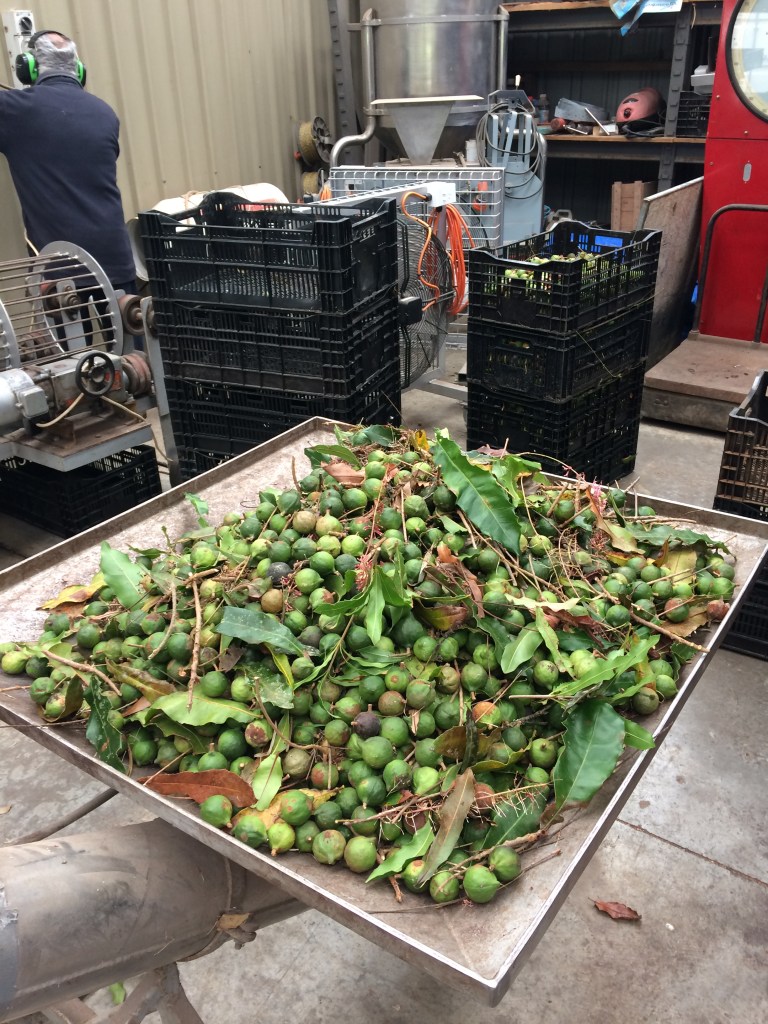
Husken och småkvistar som följt med mals till kompost och leds genom ett rör ut till en behållare. Resten av nöten, fortfarande med det bruna innersta skalet på, leds till nya backar.
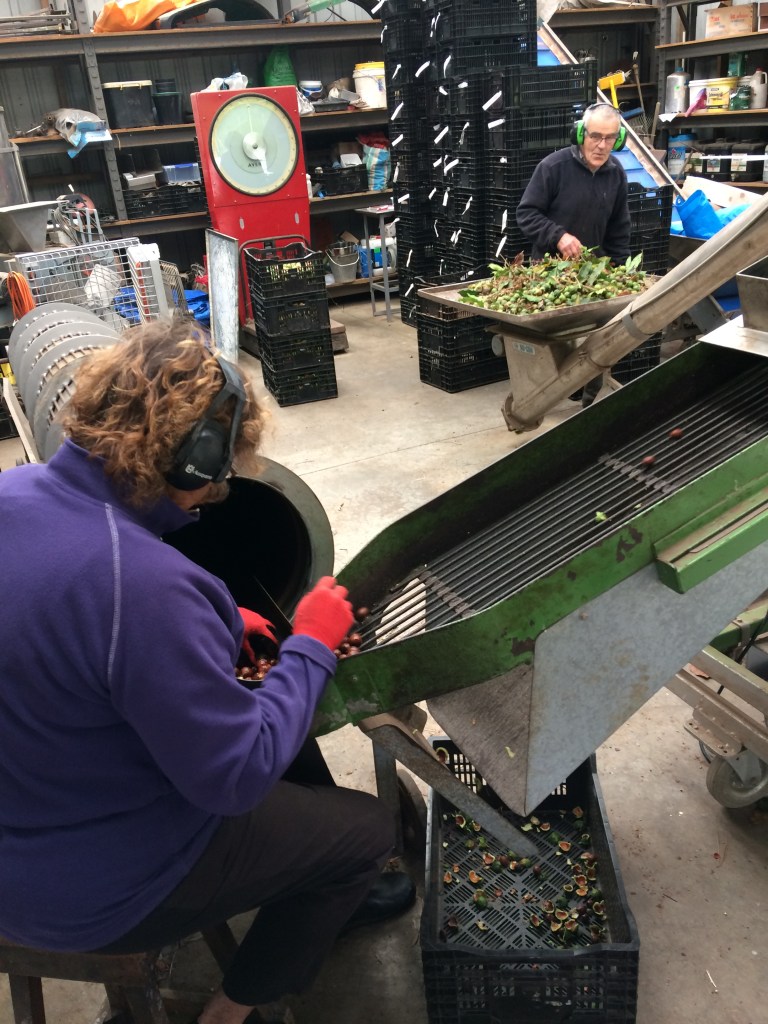

Dessa nötter förs sedan till ett torkrum där de torkas. Jag vet inte hur länge, men i alla fall över natten.

Sedan är de redo att processas. Om det inte redan framgått är John väldigt stolt över sina maskiner och vill inte att någon ska kopiera dem. Men å andra sidan resonerar som så han att ingen annan skulle förstå hur man bygger dem, så han gick med på att jag filmade processen. Det är en något skakig historia, men här är den!
Nötterna leds alltså upp genom ett rör till en form av nötknäckare, där nöten separeras från skalet.

De leds sedan vidare till en roterande trumma med hål som blir större och större. Mindre nötter faller ner genom hålen direkt och landar i en behållare, medan större nötter faller ner i andra behållare längre fram.


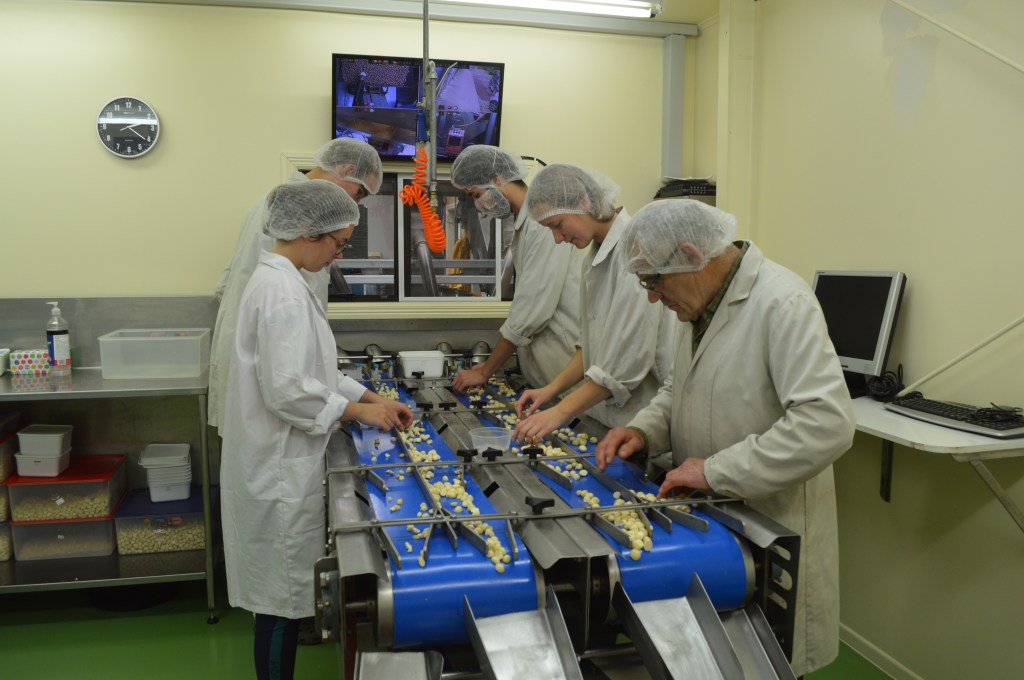
Ur dessa behållare sugs nötterna sedan genom ett annat rör in i ett rum bredvid där de sista finjusteringarna görs. Där står ett gäng wwoofare redo och sorterar nötterna på ett rullande band. Det är ett monotont arbete där man hela tiden stirrar ner på bandet och rör händerna fram och tillbaka. Men eftersom maskinerna är ganska bökiga att köra och städa gör man det inte bara en timma – utan när maskinerna väl är igång kör man en hel dag.
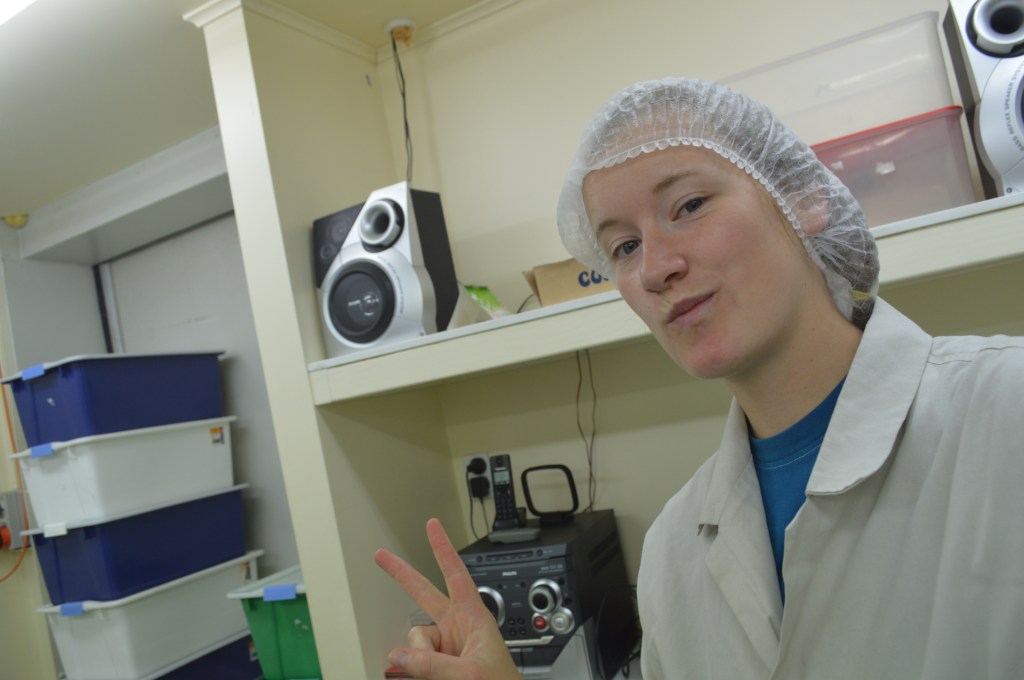
För att göra det uthärdligt spelar Sue hög musik hela tiden. Ganska otippat är det disco, hiphop och house som gäller så det är galen feststämning, tänk DJ Clabbe! 😉 Fantastiskt!
Skal som följt med sorteras ner i en tunna, stora och hela nötter läggs på ett eget band, mindre nötter på andra band. Nötter som har fläckar eller fula färger, så kallade rejects, petas ner i en annan behållare genom små hål som finns längs bandet.
De olika banden leder ner nötterna i olika lådor. Här är själva processandet slut. Innehållet i lådorna läggs sedan i påsar som görs syrefria genom att kväve pumpas i. Kvävet är tyngde än syret vilket gör att det läggs ”på botten” och därmed tvingar ut syret. På så vis håller nötterna två år.
Påsarna markeras och är sedan redo att köras till kunden, det vill säga de producenter som inte har egna maskiner. John och Sues egna nötter förpackas i särskilda påsar med egna etiketter, som sedan körs till olika återförsäljare.
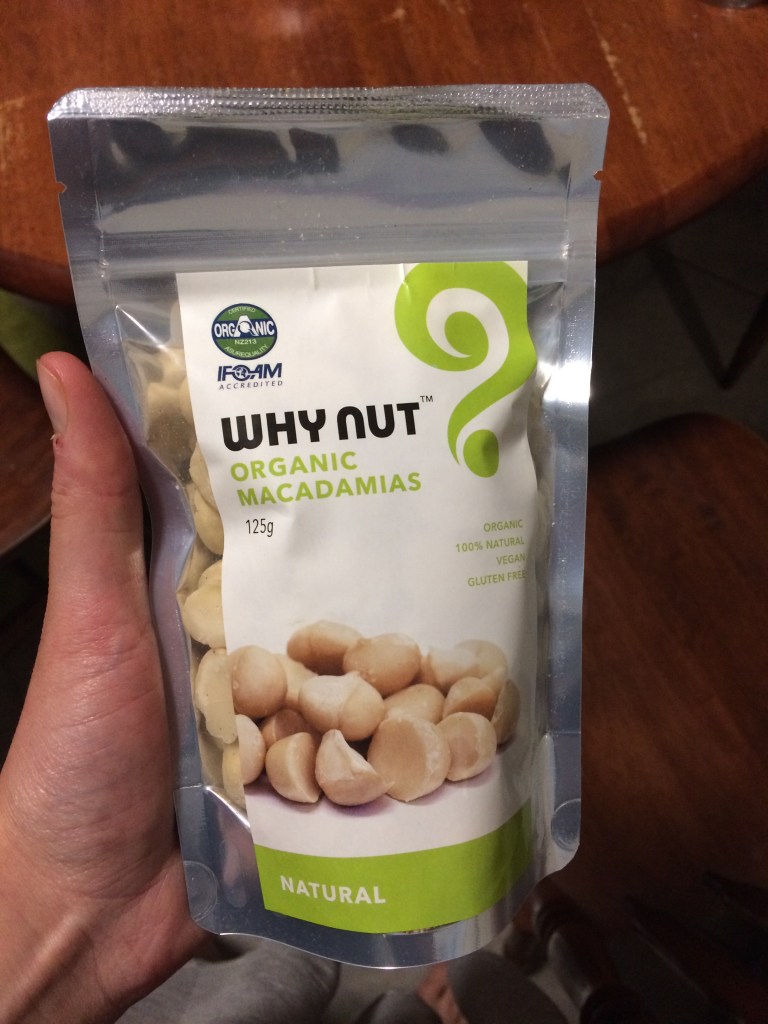
Som jag skrev i förra inlägget vill man undvika avfall – så de bruna nötskalresterna mals i en annan maskin och blir finskaliga korn. De funkar utmärkt att använda som grus eller trädgårdsplanteringar.
Voíla! Så går det till.
För mig som älskar att organisera och kategorisera var det väldigt fascinerande och kul att få va med i hela processen. Enda nackdelen var väl den onda nacken, haha 😉
ENGLISH!
In my previous post I wrote about the life at a macadamia nut farm. What happens with the nuts after they’ve been picked, you might wonder? Well, that’s what I’ll tell you now!
First, the nuts are taken to a combined garage/workshop where the outer shell, called husk, is removed. This is done by a machine built by the owner John. He has actually built all the machines used in the production. According to him, these are very efficient machines that can produce big quantities, and since not all macadamia nut producers have as good machines like this, or none at all, John and Sue are processing their nuts as well. As a consequence of that, the garage is full of craters with nuts, and those that can’t fit in there are stored in a container next to it.
Husks and small branches are being grinded to compost and led through a pipe to a container. The rest of the nut, still with the brown shell on, are led to new craters.
These nuts are then taken to a drying room where they are stored for at least a night, until they are dry enough to be processed.
If it wasn’t clear enough by now, John is extremely proud over his machines and doesn’t want anyone to copy them. But on the other hand, he isn’t really afraid no one actually could understand how they’re built, so he agreed on letting me film the process. It’s a bit shaky, but let’s say it just adds some authenticity 😉 Here it is!
So, the nuts are led through a pipe to a kind of nut cracker, where the nut is separated from its shell. They are led further to a rotating trommel with holes that are getting bigger and bigger. Small nuts fall through the holes immediately ending up in a small container, while larger nuts fall down in other containers further ahead.
From these containers the nuts are led through other pipes to a neighboring room where the final processing is done. In this room, a group of wwoofers are ready sorting the nuts on a conveyor belt. It’s a monotonous job where you always have to stare at the belt while moving your hands back and forth. Since the machines are quite complicated to run and clean this is nothing you only do one hour – once the machines are on you are working the whole day.
To make it somewhat nice Sue plays loud music all the time. It’s like a party in there – old disco hits are being mixed with heavy techno beats and house. Quite unexpected if you ask me, but it’s absolutely wonderful.
Nut shells that made it through this far are sorted out in a barrel, large and whole nuts are sorted on a separate belt while smaller nuts go on another belt. Nuts with ugly marks or colors, so called rejects, are pushed down to another container through small holes along the belt.
The belts all lead to boxes where the nuts end up, and this marks the end of the processing. The nuts are then put in bags that are made oxygen free by the adding of nitrogen. Since nitrogen is heavier than oxygen, it moves to the bottom of the bag, pushing the oxygen out of it. By doing this, the nuts last for two years in these bags.
The bags are marked with the nut size and are then ready for the customer, nut producers without their own machines, that is. John and Sue’s own nuts are packaged in bags with their own label, and will then be driven to retailers.
As I wrote in my previous post they want to minimize waste, which means that the nut shells are grinded in another machine into fine ground grain. They work excellent as gravel or as to cover weed mats in gardens.
Voíla! That’s how you do it.
For me who love to organize and categorise it was fascinating and fun to see the whole process. The only ”drawback” to it was the back pain that came with standing by the conveyer belt all day, haha 😉
 Gröna Julia